How to Interview Effectively

Interviewing candidates effectively is so hard -- you only get a few hours to determine if this person has the right skills, experience, temperament, cultural alignment, leadership style, etc. to fit into this specific role in your organization.
A few tips about structuring the interview event:
- Schedule sufficient time, such as 90 minutes instead of 60 minutes, depending on the role's complexity/seniority
- Before you start interviewing, consider the flow you want to follow, such as a recruiter screening call, then a hiring manager screening call, then an interview, and then a second interview
- Try to avoid rushing out of a previous meeting and being late for the interview if possible
- There's great value in having multiple people in the interview, so you can have a few (2-4) people interviewing the candidate, which can be powerful (ensuring that the tone isn't a "firing squad" who asks non-stop questions and doesn't let the candidate fully answer questions
- Plan, before starting an interview, on your approach, including discussing with anyone else who will be in the interview with you from the hiring company side, to ensure you're clear on what's the most important to determine in the conversation. Depending on phone screens or other previous conversations and the role's needs, you may want to focus on experience, specific skills, aptitude, how they solve problems, how they may collaborate with clients, how they present to senior leaders, etc. You may want to go so far as drafting a rough script of who asks what questions and when, so you get all the interviewers engaged.
- After the interview ends, circle up in person immediately (schedule this time before the interview) with the other people in the interview, and start talking about people's perspectives/feedback/red flags. In these discussions, it's valuable to ask the introverted and/or junior people to talk first, so that the extroverted and/or senior people in the group don't bias their feedback.
- Share feedback with your recruiter quickly, articulating specifically any concerns/issues, so the process can continue smoothly, if they're not the right fit, or if you have concerns but are still considering them
Note: Long before the interview, make sure you've invested time in crafting a clear job description that communicates your organization and team's culture, and what you need from this role. Job Descriptions are often thrown together, and then the resulting interview process goes poorly because recruiters and candidates (and you) aren't clear on what is really needed from this role.
Initial Screening Questions
Based on a 81 sec video from Dr. Geoff Smart, who wrote Who: The A Method for Hiring (see this SMARTtools page for templates/resources from that book):
- What are your career goals?
- What are you great at (your superpower), professionally (give me some examples)?
- What are you not great at, professionally (give me some examples)?
- Who were your last 5 bosses and how would they rate your performance from 1-10? And why?
Core Interview Questions
These questions are based on the book Who: The A Method for Hiring (see this 1 min video from Dr. Smart on Who Interview and see this 1 min video on Focused Interview).
- Revisit some of the screening questions if the group hasn't heard answers to them:
- What are you really good at, professionally (give me some examples)?
- What are you not really good at, professionally (give me some examples)?
- Who were your last 5 bosses and how would they rate your performance from 1-10? And why?
- Tell me about your last few roles. For each role:
- What are you most proud of accomplishing in your last role?
- Tell me about how you, specifically, planned and accomplished that
- What were some low points during that job? (Don't let candidates 'off the hook' on this – keep asking until you hear the real 'lows')
- Why did you leave that job?
- What are you most proud of accomplishing in your last role?
Interview Exercises
Depending on the role, I find it incredibly powerful to identify an "exercise" to do during the interview, to learn more about how the candidate analyzes, thinks, plans, and communicates (not just how they answer interview questions).
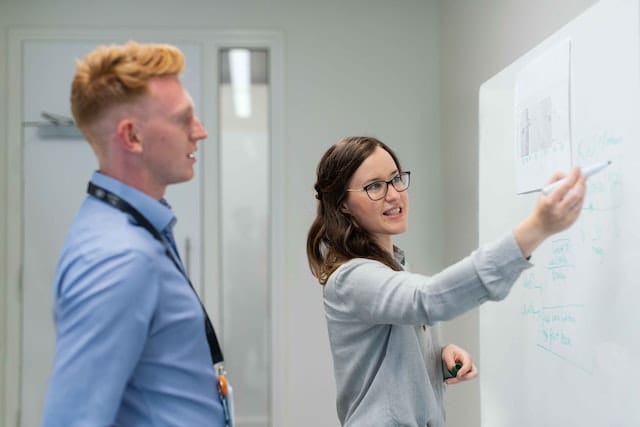
When possible, I love to ask them to use a whiteboard (if in-person) or a virtual whiteboard as part of the exercise (to see a little more about how they think through things).
Some examples are:
- Teach us something new (the thing they teach doesn't need to be related to the job they're interviewing for -- you're looking for how they think about complex things and explain them to someone who doesn't understand them. I've had people teach me, in interviews, how nuclear submarines work and how marketing campaigns are planned.
- Plan a project for us, thinking through all the various phases, of an example project related to the job (e.g. Plan a project to design and launch our new company website), and see what aspects of project management (e.g. scope, validation, buy-in, planning, launch, execute, monitor and control, production go-live, post-production support, transition to sustainment team) and the relevant domain (e.g. For a website, did they consider information architecture, user experience, SEO) they think through and which ones they miss.
- How would they assess the maturity of an existing team/function, such as "We have a 3-person cyber security policy team -- how would you assess their current maturity, capabilities, and backlog?"
Additional Interview Questions from Vanessa Van Edwards
- What's something you used to believe but no longer believe?
- Who were the competitors at the last company you worked for and how did your company differentiate itself?
- Tell me about your best and worst days at work.
- If I called your current boss, what would they say about you?
- Are you working on anything exciting outside of work?
- Describe the last significant conflict you had at work and how you handled it.
Additional Questions
- Are you satisfied with what you have accomplished in your life so far?
- Where do you see yourself in three years?
- What are your biggest personal goals? career goals?
- Would you consider yourself a reader? What kinds of things do you like to read?
- What was the last book you read? What are you reading now?
- How do you make sure that you follow up on your assignments? Do you have a system?
- How do you typically prepare for meetings?
- If things go wrong with a project, what obligation if any do you feel compelled to share with your boss?
- If someone else has wronged you in some way, how do you deal with the situation?
- Can you tell me about a recent situation where you had to share bad news with someone? How did you handle it?
- Have you ever been in a situation where you had to make good on a commitment that you wished you hadn’t made?
- How do you feel about this opportunity?
- What work experiences have you had that prepared you to be successful in this position?
- What do you see as your three greatest strengths? What do you think is your biggest weakness?
- How do you learn best? How would you describe your learning style?
- You’ve accomplished a great deal. To what do you attribute that success?
- We all make mistakes. When you discover that you have made one, how do you handle it?
- How well did you do in school? If you had to do it over again, how would you have done it differently?
- What do you wish they had taught you in school that they didn’t?
- Do you consider yourself a smart person? If so, why?
- What’s your general approach to problem-solving?
- How would you describe your learning style?
Some Questions for Leadership Roles
- How do you make sure that people who work for you follow up on their assignments and complete them on schedule, in the right priority order? Do you have a system or tool you prefer?
- How would people who have worked for you to describe your leadership style?
- What have you done, in your past leadership roles, when a team member isn't performing? What should you have done?